






By Natasha Rombough, Director, Marketing and Communications, CHBA
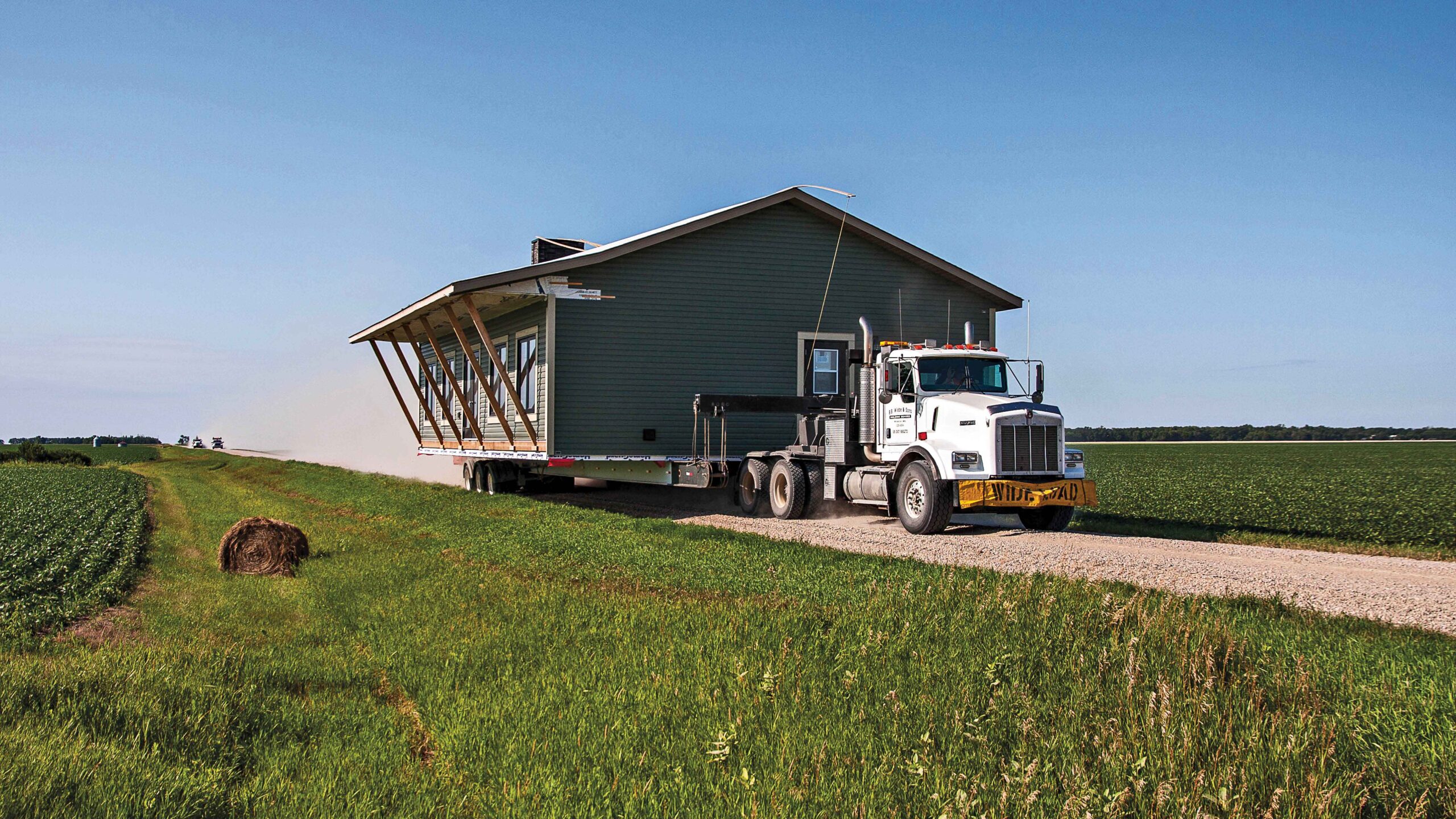
If it seems like you’ve been hearing a lot about factory-built construction these days, you’re not imagining things. Modular building techniques have taken the public – and the government – by storm, often touted as the answer to increasing sector productivity and improving Canada’s housing supply gap. And while it’s true that there are certainly huge opportunities to be had, factory-built homes are not a silver bullet for the entire housing crisis. As site-builders, renovators and modular factories themselves know, the path to widespread adoption is far from straightforward. There are significant barriers that must be overcome if Canada is to use modular construction to its full potential.
Why Canada has been slow to adopt more modular construction
Despite its promise, modular construction faces substantial obstacles that have limited its adoption in Canada and in many other countries similar to Canada, such as Australia and the United States.
One of the complexities is the ebbs and flows that our housing market typically experiences. Site-built construction business models evolved to be able to expand and contract along with the market, with limited overhead and few employees, using sub-contracting to roll with the turbulent sales cycle. In the current downturn, for example, if Canada’s residential construction industry was made up primarily of factories, we would be seeing company bankruptcies rather than just layoffs. High capital investment, high overhead and a dedicated full-time workforce drive the need for steady throughput, making factories vulnerable to market fluctuations.
Regulatory and policy hurdles are also challenging. Time and resources are wasted when there are duplications of inspections in the factory and on-site – CHBA is working to collect data where it can, to show the inefficiencies. And the benefits of reproduction at scale are lost when the same product must be built in different ways due to jurisdictions interpreting the building code differently or imposing different by-law requirements. Transportation restrictions can make the logistics of moving modules within provinces and across provincial borders overly complicated, but these problems are not unsolvable if governments come together to recognize the needs. Government and/or regulators also need to step in to work with financial institutions to create better construction financing that recognized the reality of off-site construction. But if steady demand can be secured and more financial investment and de-risking can be rolled out, there is plenty of room for added factories in Canada. Then more builders can take a modular-first approach that allows for repetition and the gains made by production on a large scale.



Addressing labour challenges
Residential construction has struggled with labour shortages for years, and the problem is projected to get worse. BuildForce Canada estimates that 22 per cent of workers will retire over the next decade. The problem is further compounded by fewer young people entering the trades due to society encouraging university education over vocational training, and Canada’s immigration system not targeting the types of workers actually needed in residential construction.
To give a sense of the magnitude of labour shortages, BuildForce Canada calculated that to attain the Government of Canada’s stated goal of building 5.8 million new homes by 2033, the workforce needs to grow by a staggering 83 per cent above the current status quo. Realistically, that’s not possible. Which means builders and renovators must find ways to create more housing with fewer people. That’s where modular construction can really make an impact.
When modules and panels arrive on site pre-assembled and ready for installation, fewer tradespeople are needed. The accelerated timelines achieved in factory-built construction allow smaller teams to accomplish more in less time, improving overall productivity. There are also gains to be had thanks to the accuracy and consistency that modular construction is known for, which results in less rework.
CHBA’s Modular Construction Council leading the way
The potential to address labour shortages is the main reason why, in 2017, CHBA created its Modular Construction Council, bringing together the Canadian Manufactured Housing Institute and MHICanada to join forces under the CHBA banner. The Council, which is made up of representatives from modular factories across Canada, supports the increasing role of factory-built construction in the building industry. Their familiarity and expertise, combined with the experiences and insights of stick builders, informed CHBA’s Sector Transition Strategy which was released last year and received extensive interest from government and media.
The Strategy provides the government with concrete steps it can take to help to address Canada’s housing crisis and improve housing affordability through the increased productivity of factory-built solutions.
First and foremost, Canada needs a market environment that makes purchasing a home of any kind more attainable. That means changes to our financial systems that enable well-qualified Canadians to buy a home. We need policy changes that stop adding red tape that cause delays and add to construction costs. Governments need to stop making additions to the building codes without considering how they’ll impact affordability, and get development charges under control. And we can’t rely only on modular construction to make up workforce shortfalls alone; we need changes to better support Canadians and industry to get people into careers in residential construction, and we need to change the immigration system to bring in the right workers to help build homes. Finally, to see real productivity changes, there must be substantial capital investment into factory-built construction, it must be incented and de-risked, and better construction financing products for modular must be created (see more about progress in that area on page 30, Financing Products for Modular Homes.)
Only once we have an environment where housing production can actually increase will we be in a position to allow more adoption of factory-built construction.
Modular construction has international appeal
Many countries around the world are experiencing labour shortages in residential construction. Like Canada, they’re also looking to modular construction as a potential solution, and it’s a topic of great interest for the International Housing Association (IHA), where CHBA is heavily involved. The IHA is comprised of organizations from countries around the world representing the home building industry. It is, essentially, the international association of home builders’ associations, with nations from six continents and including both developed and developing countries.
CHBA was a founding member of the IHA more than 35 years ago, and CHBA’s CEO Kevin Lee is past chair of the IHA. Today, CHBA still plays an important leadership role, including being elected as secretariat in 2025. Through collaboration with other IHA countries, our participation impacts international affairs that affect Canada’s residential construction industry, while also bringing back to Canada lessons learned from abroad to inform CHBA activities to best serve our members, including around factory-built construction.
In September, CHBA hosted the annual IHA meeting in Calgary, where modular construction was on the agenda. Norway has successfully incorporated a lot of factory-built construction, while Japan, considered a world-leader in the space in many ways, and facing major labour shortages due to an aging population, is still predominantly a site-built country. Others have had much slower mass adoptions, including Canada and nations similar to ours in both size and construction processes, such as Australia and the U.S. Meanwhile, some have rushed into factory-built construction, such as Ireland, which is actually now seeing factories closing and/or becoming insolvent in the slowed market.
“Just like we have similar issues in each province, countries around the world also have many challenges in common that they’re working through,” says Kevin Lee, CHBA’s CEO who represents CHBA at the IHA on behalf of Canada. “The IHA brings us together to share strategies and lessons learned. What works in one country may or may not work as well in another for a variety of reasons, and this is what we’re seeing with modular construction. There are many things we can learn from each other.”
As part of information-sharing among nations, while in Calgary, members of the IHA toured Promise Robotics’ new state-of-the-art factory that uses automation and AI-powered robots to produce homes from single-family to multi-story apartments – a real view into the potential of the future. (Learn more about this exciting topic on page 40).
What’s next
In September, the federal government launched Build Canada Homes (BCH), a new federal agency that will focus on creating more affordable (i.e. non-market) housing to fight homelessness and provide housing for low-income households, by leveraging public lands and placing emphasis on using modular construction. CHBA emphasized that the government should use the private sector to actually develop land and build the housing units, and Prime Minister Mark Carney emphasized this partnering with industry in his remarks. The government has also acknowledged the importance of eliminating duplicative inspections and streamline approvals for factory-built homes, which were direct recommendations from CHBA’s Sector Transition Strategy.
But BCH aims to build only less than one per cent of the nearly 500,000 units of all housing types that government says Canada need to build each year, and will focus on government-subsidized housing, so it will not be the answer to improving affordability for the average Canadian. While it may help influence some positive changes to address the challenges to modular construction, CHBA is pushing the government to do much more outside of BCH.
CHBA will continue to advocate for builders, renovators, factories and Canadians in terms of housing affordability and supply. And for site builders and renovators: Now is the time to explore how modular construction could be incorporated into your business model – so CHBA is creating a training initiative expressly to support those interested in exploring the transition to working with off-site factories to address their labour shortages and speed up project delivery. Get engaged, attend a CHBA Modular Construction Council meeting, sign up for CHBA’s Modular Construction newsletter, check out CHBA’s Working with Modular webinar series, talk with other builders who have successfully made the change, and consider how your business will look in the years to come.
Top Benefits of factory-built construction
- Faster construction with fewer delays
- Year-round work with limited weather issues
- More energy efficient and less waste
- Increased output with less labour
- Easier to get labour (fewer barriers to entry, appealing conditions, ideal for immigrant workers)