






By Wayne Karl, Editor, Building Excellence
For Lacey Construction Ltd. in Fraser Valley, BC, building award-winning residences – often in remote areas – over the course of its almost 30 years in business, might be enough of a calling card to be proud of. But for this established custom homebuilder and renovator, such success is only part of its story.
Add in an increasing focus on modular construction, with an emphasis on an appreciation for the First Nations and women among its crew members, and you have a company taking a leadership position on a number of fronts.
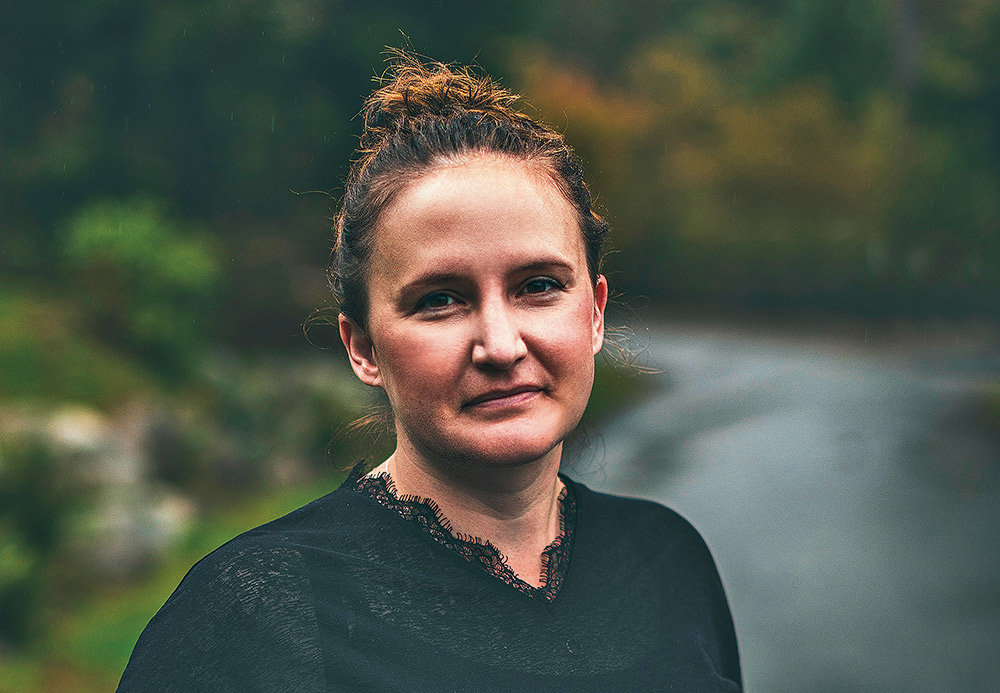
For insight into Lacey Construction, the challenges and opportunities of modular housing – and some advice for likeminded builders – we sat down with Business Manager Lesa Lacey.
Let’s start with an easy topic… a brief introduction to Lacey Construction…
Lacey Construction is a full-service construction firm – renovations, custom homes and commercial work. Founded in 1999 by Erik Lacey, we are a proud five-time CHBA Fraser Valley Custom Home Builder of the Year and three-time CHBA FV Renovator of the Year. Our success is grounded in our amazing team. In 2026, six of our team members will be celebrating their 10-year anniversaries and another seven have been with us more than 10 years. Our team includes past clients and family members of clients, and we are so fortunate to have such a crew. More than 25 per cent of our field team are women and more than 10 per cent are First Nations. We have all ages from 18 to 72 on our crew.
How much of your business is modular housing, and how fast is it growing?
All our current custom home projects, and new builds in First Nations communities, include prefabricated or modular components. From insulated concrete form (ICF) to pre-framed wall panels, to full structural insulated panels (SIP) wall systems, we find modular components to allow us to increase the quality of the final build. We find success in partnering with other CHBA members that produce modular components to share best practices and learn from leaders in our industry.
What encouraged you to get into this part of the business?
We met the team at Winton Homes and Cottages in Prince George, BC, another CHBA member, years ago, and hearing about their process, we saw that we could use better framing materials from their plant in Prince George than we could get in the lower mainland at that time. This partnership allowed us to expand our understanding of what it meant to work with modular, allowing us to expand what modular looked like in our custom homes and builds. We had the privilege of working with Sandpiper Resort in Harrison Mills, BC to build their new cabins – on an extremely tight timeline. To meet their deadline, we worked with full SIP panels and timber framing to deliver gorgeous cabins that came in on time and on budget.
Around that time, we put together a high-performance build with BASF technology from inside a medium security institution in Canada. This opened our eyes to the flexibility of working with modular components to achieve better energy efficiency and higher quality. I continue this work with supporting individuals who are justice-impacted to look at careers in construction post-release. Modular factories are a good spot to start a career in trades – regardless of your background.
How well have your suppliers kept pace with the demands of modular housing?
With more than 27 years in business, our suppliers are part of our team’s success. We work with them to stay on top of emerging technologies and more. We see more and more of our supplier partners looking to incorporate some form of prefabrication in their business models. Our truss supplier is now framing full wall panels and becoming more of a one-stop shop. They are responding to the same themes in the industry we are responding to – more efficient construction at a higher quality.
What differentiates your company from others that are involved in modular housing?
Not sure this makes us different – but we do consider modular and prefab on each of our projects. Does this fit the project? Does this work for our client? Will this help us achieve our clients’ goals?
Why do you think more companies aren’t involved in modular housing?
Some builders are unaware they are using modular components – and part of this is a mind shift. From trusses to floor assemblies, custom builders are used to working with some prefabricated components for construction. We regularly use modules from our supplier partners to meet engineering requirements.
By moving the bulk of the building process into a controlled environment, even custom builders can eliminate many of the delays and headaches associated with traditional builds. Homes can be built with factory precision, ensuring higher quality control and quicker delivery to sites – no matter how remote it may be.
What advice would you have for builders considering getting into the business?
One challenge of working with more prefabricated components is that you must be ready to talk to your clients about being firm on approving their plans. It is more difficult to make changes when you order the walls or components in advance, and those last-minute changes can make a big difference to your budget. We suggest getting your clients to physically or electronically sign off on each page of their plans – and review together in detail before ordering your package from your modular or prefab partner. Therefore, it is key to ensure you have strong language around change orders and the impacts of making changes onsite when using modular components. Once you get to a job site, those changes are much more difficult to make. Check out the CHBA National resources on contracts and looking at draft contract language – including highlighting change orders.
As a custom builder, there are multiple benefits to working with a prefab or modular partner. Timelines are shorter, we use less framing labour, the sites are safer and we benefit from factory precision. The materials are higher quality, we meet our goals of reducing waste and we work on future forward building.
laceydevelopments.com
And on a personal note…
What or who is your greatest inspiration for what you do?
I dropped out of university in spectacular fashion six months after starting – it was not the space for me. My aunt gave me a job with her event planning company, and I worked with many different industries in that capacity. I saw how business worked in different industries, worked with leaders on their volunteer boards and saw first-hand the power of association work. At CHBA, Past President Nathan Stone inspired me to get more involved with our industry.
When you’re not creating modular housing solutions, away from the office, you…
I love cooking and sharing recipes, and I love volunteering in prison. December will be my 13th visit to a U.S. prison with Defy Ventures, assisting individuals with entrepreneurship training and support. Volunteering in prison inspires me to continually work to improve my life and the life of those around me – the Defy Ventures men work so hard to get through the program under trying circumstances, and their commitment to a better life for them, their families and their community inspires me daily.
What’s on your TV binge watch, reading or podcast lists these days?
When I am not listening to true crime, I love the podcast Wonk by the Public Policy Forum. I keep up to date with the New York Times Daily podcast, Globe and Mail Decibel, The Atlantic Good on Paper – and for comedic relief, Canadian Politics is Boring.
Reading tends to be nerdy governance books, policy papers, theses or board packages. I sit on the board of the University of the Fraser Valley and spend a lot of time ensuring I am up to date with current trends in higher education and trades training.