






By Sarah Caron, Director, Renovation Services, CHBA
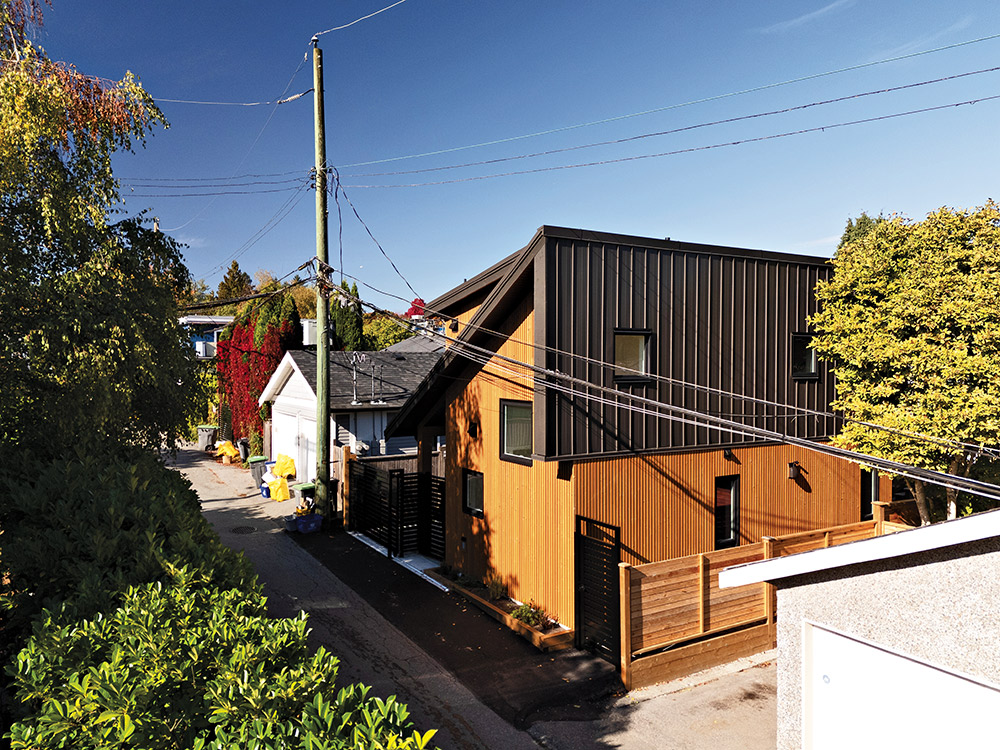
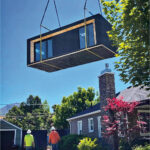
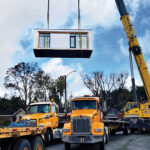
Accessory dwelling units (ADUs) are quickly gaining attention as a possible answer to Canada’s housing challenges, offering flexible, compact spaces for families, renters and communities. Cities across the country are wrestling with housing affordability and densification while the housing industry faces acute labour shortages and escalating material costs. CHBA renovators and custom builders are getting approached more and more about building ADUs, and utilizing off-site construction methods to build them can be an efficient, high-quality and timely solution. But what opportunities and challenges await those ready to embrace this evolution? Industry leaders Jake Fry and Rick Weste offer invaluable insights on the future of off-site ADU construction.
Jake Fry is the founder of Smallworks, a company specializing in panelized prefabrication and ADU construction, with more than two decades of experience and approximately 500 homes built. He played a leading role in advancing the ADU movement in Vancouver, helping to make it a citywide initiative, and founded the advocacy organization Small Housing BC. Jake has contributed to policy development at municipal, provincial and federal levels, and continues to promote innovative, scalable housing solutions through both his company and industry advocacy.
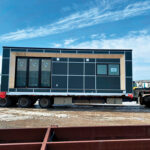
Rick Weste is the President and CEO of Triple M Housing, a leader in the factory-built housing industry with roots dating back to 1981. Operating with approximately 450 employees across two shifts, the company produces about 5,000 sq. ft. of homes daily, translating to about three completed homes every day. Their extensive reach spans Western Canada, Northern Ontario, the Arctic and the United States, with a robust dealer network facilitating local sales, permitting and logistics.


Regulatory barriers, standardization and customization
One of the most significant obstacles facing ADU construction is the patchwork of municipal regulations. Fry highlights the difficulty: “It’s tough to achieve repeatable designs when every municipality has its own set of requirements. We’ve tried to standardize construction details, but regulatory differences mean we rarely get to use identical floorplans.” Each project submission, he notes, often triggers new rounds of feedback and unique conditions, stalling progress and complicating workflows.
Rick Weste echoes this sentiment, emphasizing that regulatory inconsistencies not only slow down project timelines but also add to costs and uncertainty. “Every jurisdiction seems to want something different, which makes it challenging for us to create economies of scale or streamline production.” The absence of harmonized standards means that what works in one city might be rejected in another, diminishing the efficiency gains that off-site construction promises.
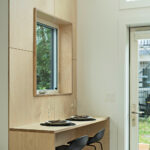
While regulatory harmonization is important, the industry must also respond to shifting consumer demands for customizable, adaptable spaces. “Today’s buyers want options – custom finishes, flexible layouts and smart technology,” Fry says. He cites digital platforms and social media with raising homeowner expectations. A winning solution is one that allows homeowners to personalize their space while maintaining the efficiencies of off-site manufacturing.





Opportunities in pre-approval, advocacy and resource sharing
Despite the challenges, there is optimism on the horizon. Fry points to the potential for municipal pre-approval of ADU plans. “It would reduce wait times, provide certainty and allow the industry to focus on quality and innovation rather than paperwork.” The approach mirrors successful models in other jurisdictions, where municipality-endorsed designs allow for faster permitting and better resource allocation.
Weste agrees, noting that the factory-built industry is keen to work with regulators to develop standard templates and repeatable solutions. “We want to be partners in modernizing the homebuilding process, not obstacles.” The creation of a resource for pre-approved ADU designs could unlock significant efficiencies and encourage broader adoption.
The path toward widespread off-site ADU adoption is not one that builders and renovators must walk alone. Industry groups and advocacy organizations, including CHBA, play a crucial role in sharing resources, best practices and policy updates. Engaging with these networks helps builders stay informed, influence policy and hone their practices.
Weste underscores the value of collaboration, encouraging builders to participate in industry roundtables, pilot projects and advocacy campaigns. “The more we share knowledge and coordinate our efforts, the more likely we are to see real progress – both for our businesses and for the communities we serve.”
The future of off-site ADU construction
Despite regulatory obstacles and shifting consumer expectations, the future for off-site ADU construction in Canada is bright. As Fry puts it, “We’re at a turning point – if we can streamline regulations and offer the flexibility buyers want, off-site construction will become a cornerstone of housing innovation.” For those ready to adapt, the opportunity is not just to build more homes, but to build them better, faster and with greater impact for Canadian communities.