





By Chloe Perreault, Communication Strategist, CHBA
Each year, the CHBA National Awards for Housing Excellence spotlights the most thoughtful and forward-looking residential developments in the country. This year’s Best New Community award finalists exemplify the impressive variety of developments and communities that our country boasts. They impressed the judges in the five main scoring criteria: Community vision, architectural features, environmental and sustainability considerations, community amenities and special features, and livability.
From vibrant urban hubs to nature-connected neighbourhoods and heritage-inspired enclaves, these five projects show that the most compelling developments aren’t just well planned – they’re also deeply livable, intentionally connected and designed around real everyday needs.
INNOVA (North Vancouver) WINNER | by Cascadia Green Development
A new benchmark for urban living
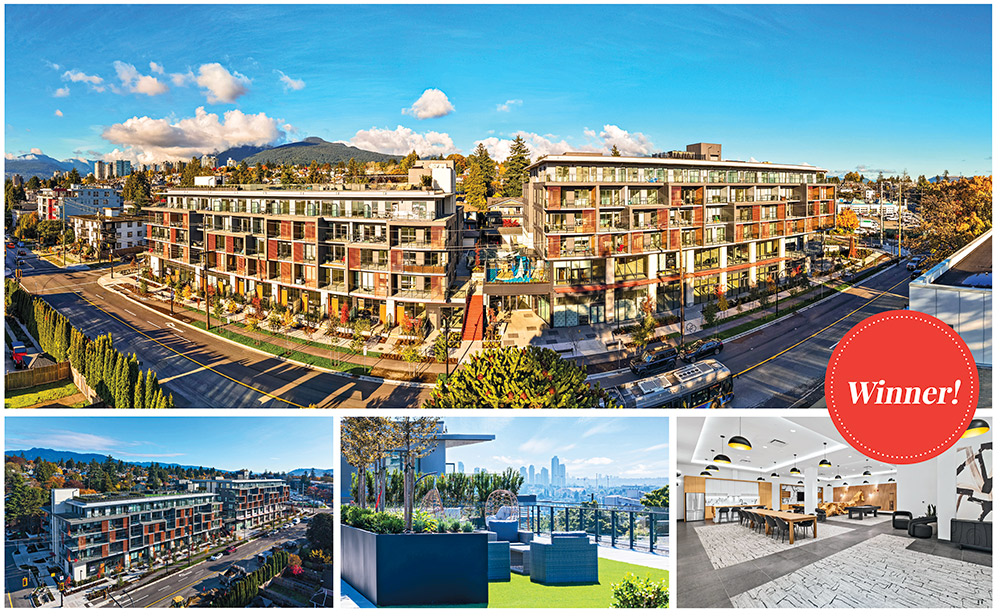
INNOVA, by Cascadia Green Development, sets the tone for this year’s finalists by showing just how much a thoughtfully planned urban community can deliver. The project transformed an existing a low-density site into a vibrant mixed-use neighbourhood with a modern West Coast design where homes, retail and social infrastructure work together as one connected whole.
With 172 homes and 22 commercial spaces, including two daycares, shops, restaurants and services, INNOVA delivers the kind of convenience many buyers now expect. What makes it especially compelling is the way it brings together the rhythms of daily life, creating a neighbourhood where residents can live, work and connect without needing to go far.
That sense of livability carries through in the design. Widened sidewalks, a central lane, active storefronts and social courtyards help create a safe, animated environment, while layered amenities, from rooftop terraces to indoor gathering spaces, support both quiet moments and community interaction.
Sustainability runs throughout, from energy-efficient systems and stormwater strategies to transit connectivity and EV-ready infrastructure.
It’s easy to see why INNOVA earned the win. More than anything, it reflects a broader shift in what buyers’ value most: Complete communities that offer convenience, flexibility and a vibrant urban lifestyle all in one place.
Finch Drive (Squamish, BC) | by Diamond Head Development
Nature, Net Zero, and a connected community
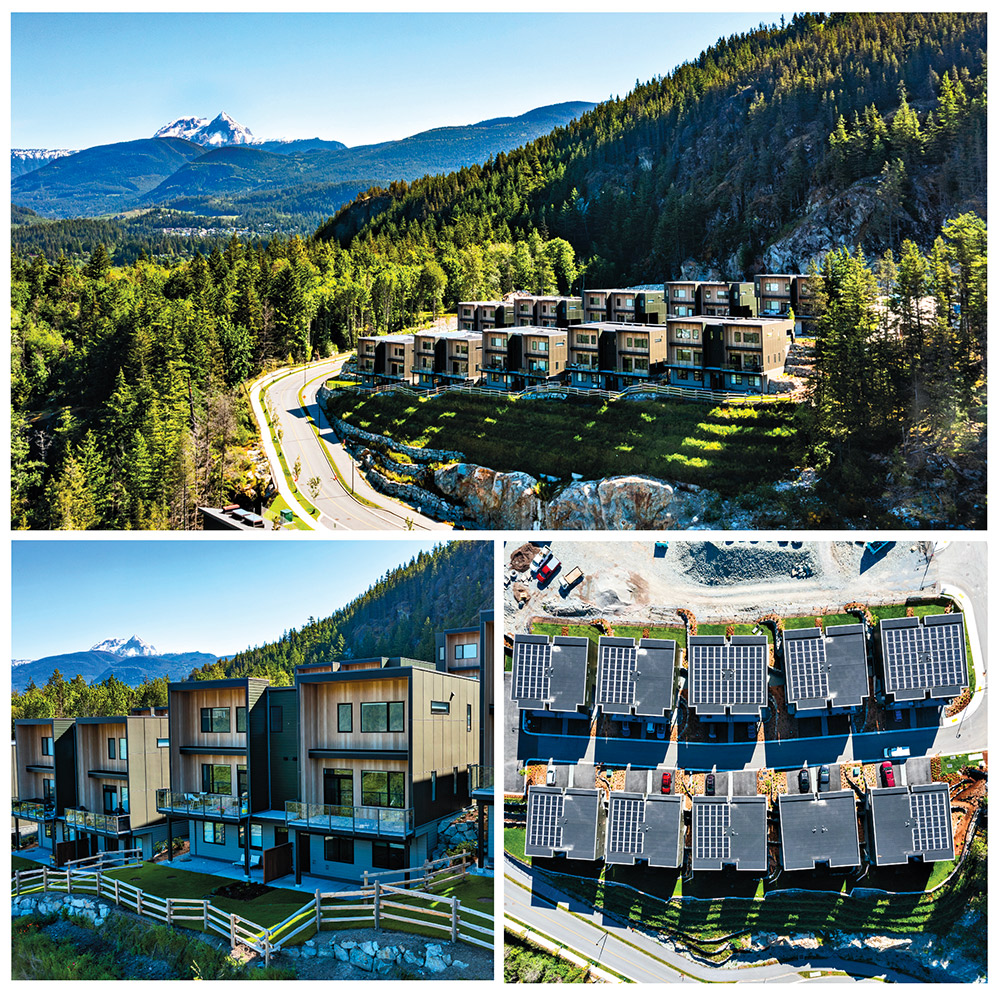
Finch Drive by Diamond Head Development is a thoughtful response to its setting: A sustainability-led community shaped by Squamish’s remarkable natural landscape. Designed to integrate with the hillside, the homes use natural materials and forms that visually recede into their surroundings.
The first two phases of the community were labelled Net Zero through CHBA’s Net Zero Home Labelling program, and all of the duplexes and townhomes feature geothermal heating and cooling. The high-performance construction makes this community a leading example of low-impact living.
With direct access to trails and parks, along with growing amenities such as daycare and shared spaces, Finch Drive is clearly designed for buyers who want to stay closely connected to nature without compromising on comfort or community.
Leah (Fort Langley, BC) by Conwest Developments Ltd.
Heritage-inspired living with a modern community focus
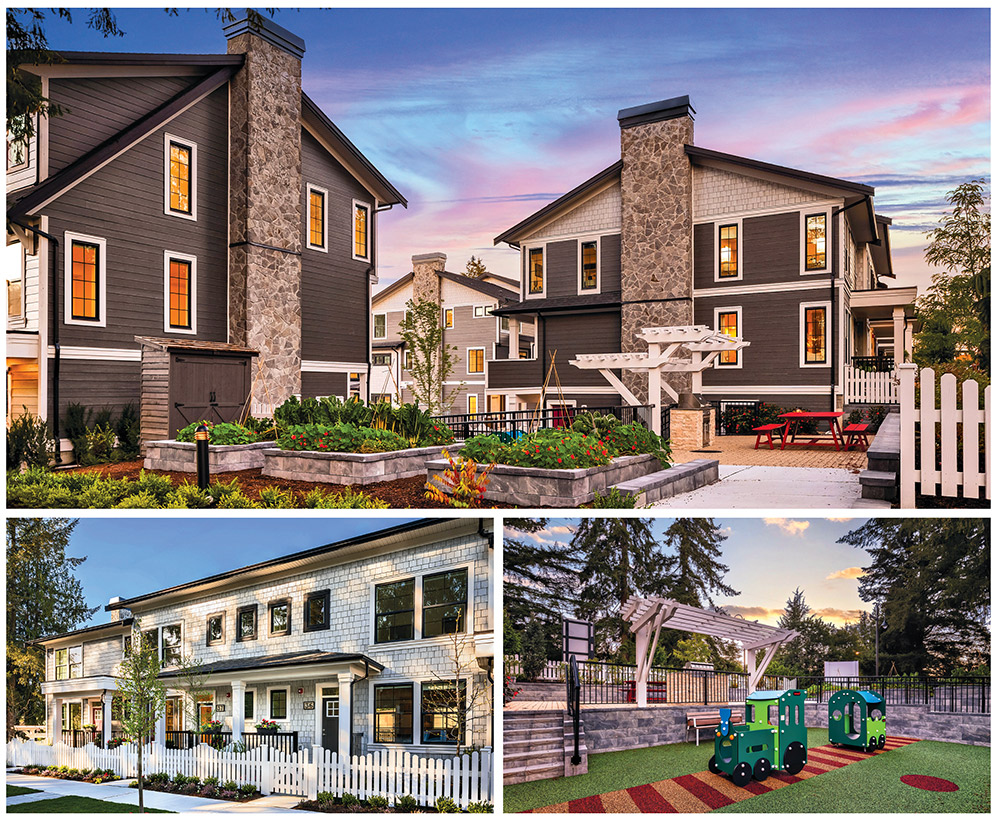
Lēah by Conwest Developments offers a boutique, village-style community that feels deeply rooted in Fort Langley’s historic character. Organized around a central pedestrian mews, the 41-home development puts walkability, connection and aging-in-place design at the heart of the experience.
Its heritage-inspired architecture, gable roofs, natural materials and muted tones help it blend seamlessly with the surroundings, while greenspaces and outdoor amenity areas encourage neighbours to gather and connect.
With direct access to the Fort-to-Fort Trail and a strong emphasis on comfort and belonging, Lēah stands out as a refined community for families and downsizers alike who are looking for both lifestyle and connection.
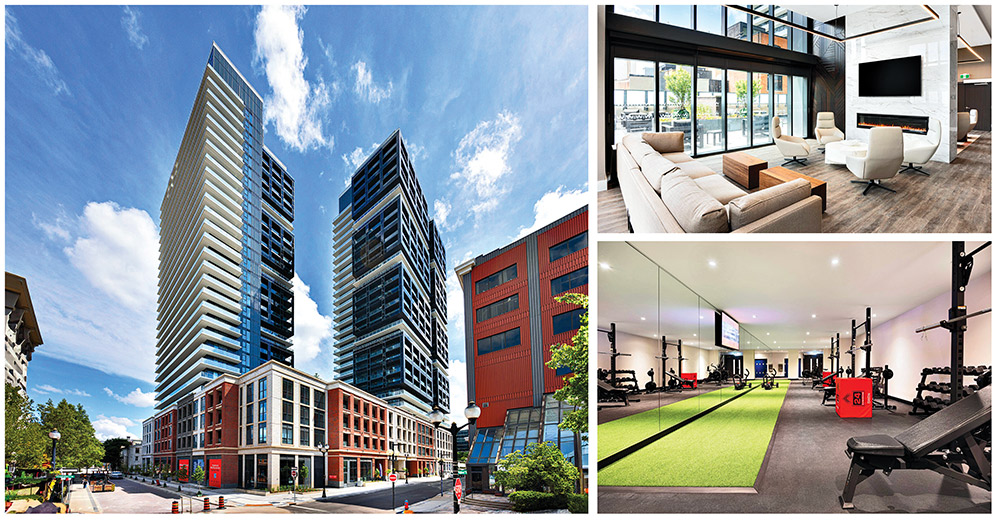
The King William (Hamilton, Ont.) by Fengate Capital Management Ltd. & Hi-Rise Group
Elevating rental living through design and experience
The King William reimagines urban rental living through a high-density, amenity-rich model in downtown Hamilton. Developed by Fengate Capital Management Limited and the Hi-Rise Group, it brings together 581 rental homes, retail space and two residential towers to create a lively mixed-use destination.
One of its biggest draws is the 40,000 sq. ft. of amenities, including co-working areas, fitness spaces and a rooftop pool – features that bring a more lifestyle-focused approach to rental housing.
With exceptional walkability and strong transit connections, the development reflects the growing demand for flexible, experience-focused urban living.
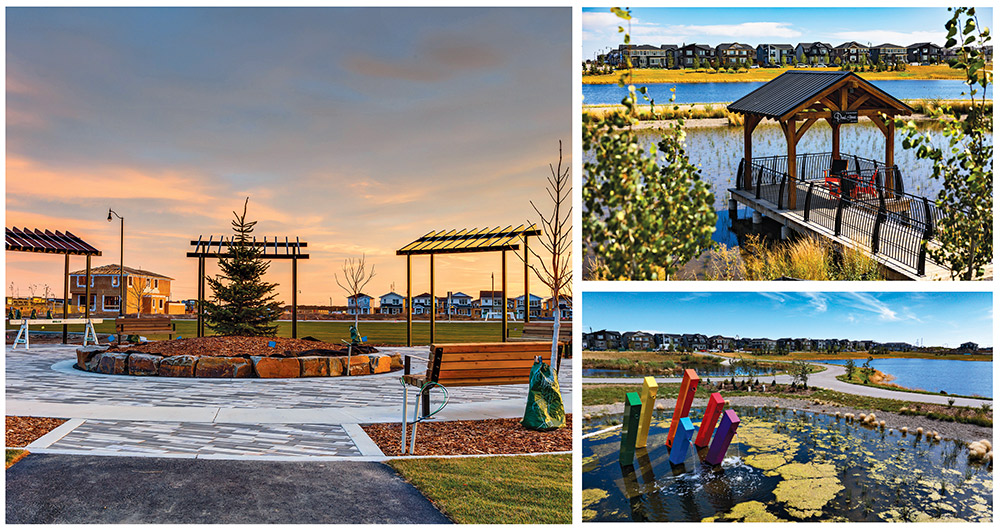
Dawson’s Landing (Chestermere, Alta.) | by Qualico
Master-planned community rooted in recreation and family life
Dawson’s Landing by Qualico is a large-scale, master-planned community designed with family life in mind. Spanning 260 acres, it combines a broad mix of housing with parks, pathways and future schools and retail, creating a setting that feels both expansive and intentionally connected.
A key innovation is its Stormwater Kidney systems, which enhance water quality while doubling as a visible community feature.
With a future EcoPark, extensive trails and year-round amenities, Dawson’s Landing presents a vision of suburban living that feels grounded in nature, recreation and long-term livability.
Looking at the bigger picture: What defines Canada’s best new communities?
Across all five finalists, several key themes emerge:
1. Lifestyle-first planning
Today’s buyers are choosing communities based on how they want to live, with walkability, convenience and access to nature playing a much bigger role in decision-making.
2. Amenities that matter
From daycares and retail at INNOVA and The King William, to trails and parks at Finch Drive and Dawson’s Landing, the most meaningful amenities are the ones that support everyday life, not just occasional use.
3. Sustainability as a baseline
From Net Zero Homes to stormwater innovation, sustainability is longer just a bonus for many buyers – it has become a baseline expectation built into the strongest projects.
4. Diversity of housing options
Flexibility is key. Communities that offer multiple housing types and tenure models are better positioned to attract a wider demographic.
5. Authentic sense of place
Whether urban, heritage-inspired or nature-focused, each finalist succeeds by reflecting its setting in a meaningful way.
Taken together, the 2026 finalists make one thing clear: There’s no single formula for success in community development. What matters most is the alignment between design, location, lifestyle and what buyers genuinely value.
For developers, that message feels especially relevant. The future of residential development is about creating complete connected communities that people can truly imagine themselves being part of.